Last week, the San Francisco Business Times announced their annual list of the best places to work in Silicon Valley. We are thrilled and honored to see Palo Alto Networks at the very top of this year’s list!
Palo Alto Networks is a special place, and for many of us it’s by far the best place we have ever worked. Take a look at our People of Palo Alto Networks video series to see some of the reasons why our company means so much to us. Our highly collaborative culture allows us to work together and learn together. We delegate decision making and let us have ownership over our work. We value self-awareness and have a learning mindset, in which we recognize our strengths and weaknesses and continually strive to improve. In other words, a culture without egos and without walls.
Thank you to the San Francisco Business Times and to our employees who ensure our culture is the magic in our work environment. This is an extraordinary company made up of extraordinary people, and it’s an honor to work with everyone here. Go Palo Alto Networks!
If you’d like to learn more about opportunities for joining this great team, I invite you to visit ourCareers page.
Last week at the Joint Service Academy Cybersecurity Summit at the United States Military Academy in West Point, Palo Alto Networks President and CEO Mark McLaughlin spoke with Fox Business Network correspondent Jo Ling Kent about ongoing efforts to improve cybersecurity.
Mark homed in on three things organizations can do to achieve the end goal of raising the cost of a successful attack, and making it successful breaches more difficult for attackers:
Have a breach prevention mindset
Make sure to share threat intelligence
Continually educate the public on cybersecurity and good cyber hygiene
The Summit is an invitation-only gathering of service academy graduates serving in critical leadership roles and select thought leaders from industry, government and academia that comes together to strengthen ties between industry and government, share best practices to secure the internet and defeat cyberthreats.
Malware writers have always sought to develop feature-rich, easy to use tools that are also somewhat hard to detect via both host- and network-based detection systems. For many years, one of the go-to families of malware used by both less-skilled and advanced actors has been the Poison Ivy (aka PIVY) RAT. Poison Ivy has a convenient graphical user interface (GUI) for managing compromised hosts and provides easy access to a rich suite of post-compromise tools. It is no surprise it’s now being used against pro-democracy organizations and supporters in Hong Kong that have long been a target of advanced attack campaigns.
Despite its simplicity and prevalence, detection rates for both AV and IDS systems has always been surprisingly low for Poison Ivy. Possibly for these reasons, since the mid-2000s threat actors have frequently used Poison Ivy to establish beachheads within target organizations, although this occurs much less frequently today than in years past. Since the last public release of version 2.3.2 in 2008, new variants of the tool have been relatively rare, especially versions which modify the core communication protocols.
Unit 42 observed a new version of Poison Ivy which uses the popular search order hijacking, a/k/a “DLL Sideloading,” technique frequently seen in malware such as PlugX. The Poison Ivy builder has an output format option of either PE file or shellcode, and in this case the backdoor was built as shellcode and then obfuscated to help prevent detection. While analyzing the sample, we also observed a modified network communication protocol which will be discussed in this blog.
SPIVY
In March, Unit 42 observed this new Poison Ivy variant we’ve named SPIVY being deployed via weaponized documents leveraging CVE-2015-2545. All of the decoy document themes involved recent Hong Kong pro-democracy events. In all of the samples we’ve found to date the exploit drops a self-extracting RAR which contains three files:
exe – a legitimate, signed executable which is used to side-load the malware DLL
dll – the malware DLL loaded by RasTls.exe, which then loads the Poison Ivy shellcode file
hlp – the encoded shellcode Poison Ivy backdoor.
Both identified C2 domains are third-levels off of leeh0m[.]org, which was created in late February 2016, less than a month before the attacks.
Figure 1. Malicious RARs and the three files within
In addition to the new variant we discovered, Japan’s Computer Emergency Response Team Coordination Center (JPCERTCC) published a blog last July on a different new variant. That variant is also side-loaded from a legitimate executable and stub DLL, but the shellcode isn’t encoded the same way as SPIVY. JPCERTCC didn’t comment on who was being targeted in their blog, but it is notable that two distinct Poison Ivy variants have recently appeared, several years after the tool largely fell out of common use by advanced actors.
SPIVY Analysis
We believe the samples dropped have a direct connection to older Poison Ivy RATs based off of the behaviors and code reuse present in the shellcode loaded by the samsung.hlp file within the RAR. Once decoded, the shellcode is launched by ssMUIDLL.dll.
Figure 2. The encoded shellcode is decoded with a single byte addition of 0x99, XOR with 0xD4, then subtract 0x33.
The SPIVY RAT uses the same API call table generation historically used by Poison Ivy. Shown below is a comparison of a PIVY sample from 2008 and our newer SPIVY sample on the right. Both have the exact same API call table function.
Figure 3. PIVY sample from 2008 and SPIVY variant with the same API call table function.
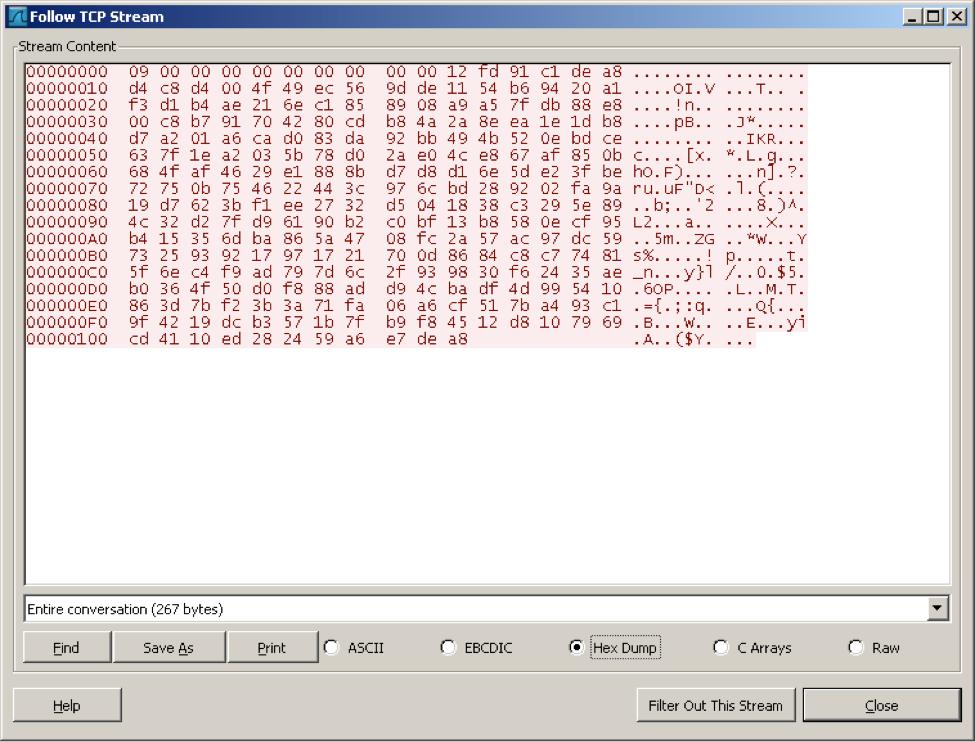
Unlike previous versions of Poison Ivy which utilize a fixed 256 byte challenge-response handshake, this new version generates a payload that has been prepended with anywhere from 1 to 16 bytes of pseudo-random data (plus control bytes), the 1st byte of which gives the length of the padding before the start of the 256 byte handshake. In the example below the first byte (0x09) tells the Poison Ivy controller to ignore the following 9 bytes (which were nulled out below for illustration purposes), plus one more byte which holds the first byte multiplied by 2 ( 0x09 X 2 = 0x12). Two control bytes, plus the 9 random, plus the 256 byte handshake gives us 267 total bytes. The Poison Ivy protocol has been very well documented in previous research by Conix Security and others, and in these samples the remainder of the protocol remains unchanged.
Figure 4. SPIVY’s new challenge-response.
We saw two Poison Ivy configurations with our samples, shown below.
Decoy documents are a common technique used by many actors to trick victims into believing they have opened legitimate files from spear phishing e-mails. The attacker sends a malicious file which infects the host with malware and then displays a clean document which contains content the victim is expecting to see.
The decoy documents associated with SPIVY are notable because they reference very specific recent events and organizations not widely publicized or known outside of the Hong Kong region and the pro-democracy movement. In addition, all appear to be legitimate invitations to actual events in Hong Kong. One of the decoys purports to be from Joshua Wong, announcing a press conference about ending the Scholarism group to start a progressive democratic political party, Demosistō, in March 2016. Joshua Wong is a well known Hong Kong activist who was one of the founders of the group and is the current Secretary-General for the political party. Scholarism centered around concerns for the Hong Kong’s Department of Education adding a mandatory course for all secondary-school students for “moral and national education”. Scholarism was successful in stopping the course and its members desired to shift into a political party to effect further change.
Figure 5. Invitation to press conference about disbanding Scholarism and establishing a political party.
Another decoy concerns the Mong Kok riot that took place February 8, 2016, the first day of the Lunar New Year. It purports to be from the Justice & Peace Commission of the Hong Kong Catholic Diocese and calls for the government to establish an independent commission to investigate the cause of the riots and for parishes to establish booths throughout April staffed with church members advertising this. The riots were officially written off as being caused by a crackdown on unlicensed street vendors, but the decoy claims it’s instead a sign of continued civil unrest and dissatisfaction with the government in Hong Kong.
Figure 6. Decoy allegedly from the Justice & Peace Commission of the Hong Kong Catholic Diocese
The final decoy is an invitation to an April 4, 2016 wreath laying event held by the Hong Kong Alliance in Support of Patriotic Democratic Movements of China. The event commemorated the 28th anniversary of the Tiananmen Square massacre and related events, information to which China heavily censors access for mainland Chinese citizens.
Figure 7. Decoy for an April 4, 2016 wreath laying event commemorating the Tiananmen Square massacre held by the Hong Kong Alliance in Support of Patriotic Democratic Movements of China.
Conclusion
The venerable Poison Ivy has been revamped and used to continue targeted attacks against pro-democracy activists in Hong Kong. It’s fairly common to see actors retool malware to make it harder to detect, though it was rarely seen before with Poison Ivy. The updated execution and communications mechanisms of SPIVY offer insight into the ever changing tools, techniques, and practices of targeted attackers. Unit 42 will continue to follow these attacks and any new Poison Ivy variants and provide updates as we uncover new information. It is clearly demonstrated by this recent campaign that an old dog can learn new tricks.
Pro-democratic activists in Hong Kong have increasingly been targeted by APT campaigns. Below are links to several related reports from different researchers. We don’t necessarily link the activity in this blog to any of the specific campaigns cited in the links; instead, they are provided for situational awareness.
October 2014 blog from Volexity titled “Democracy in Hong Kong Under Attack”
June 2015 blog from Citizen Lab titled “Targeted Attacks against Tibetan and Hong Kong Groups Exploiting CVE-2014-4114”
December 2015 blog from FireEye titled “China-based Cyber Threat Group Uses Dropbox for Malware Communications and Targets Hong Kong Media Outlets”
April 2016 blog from Citizen Lab titled “Between Hong Kong and Burma: Tracking UP007 and SLServer Espionage Campaigns”
Palo Alto Networks customers can identify SPIVY command and control traffic using Threat Prevention signature ID and AutoFocus users can track this family using the SPIVY tag.
RasTls.exe – legitimate, signed binary that is used in the sideloading process
0191cb2a2624b532b2dffef6690824f7f32ea00730e5aef5d86c4bad6edf9ead ssMUIDLL.dll – 7a424ad3f3106b87e8e82c7125834d7d8af8730a2a97485a639928f66d5f6bf4
By Danielle Kriz, Sr Director, Global Policy, Palo Alto Networks and Sean Morgan, Advisor, Cybersecurity Policy, Palo Alto Networks
Earlier this month, Palo Alto Networks joined approximately 1,000 stakeholders at theCybersecurity Framework Workshop 2016, organized and hosted by the National Institute of Standards and Technology (NIST) on its campus in Gaithersburg, Maryland. The workshop represented just the latest example of an ongoing, inclusive dialogue that started during the initial development of the Framework for Improving Critical Infrastructure Cybersecurity (“the Framework”) in 2013 and has continued since its official launch in February 2014.
The workshop highlighted the many ways that governments around the world, and businesses large and small, have uniquely applied the Framework to help manage and reduce their cybersecurity risks. NIST should be commended for its continued efforts to bring together key stakeholders from industry, academia and government to discuss uses and best practices and ensure the Framework remains the flexible, voluntary guidance document it was intended to be. Although the Framework has gathered extensive support across, and promotion by, multiple industry sectors since its launch – as evidenced by the broad spectrum of entities engaged in the workshop dialogue – NIST’s leadership and guidance remains essential.
From our perspective, a few key themes emerged at the workshop. One was the growing global dimension of the conversation – not simply about the Framework itself, but about the broader importance of developing a common cyber risk management lexicon as the world becomes increasingly interconnected. The central tenets of the Framework’s Core – Identify, Protect, Detect, Respond and Recover – provide precisely this type of shared baseline necessary to facilitate strategic cyber risk management conversations across organizational levels and borders.
One panel, in particular, on international alignment of the Framework, featuring speakers from Japan and Italy, was a testament to this conversation’s expanding reach. Increased international engagement in and acceptance of this type of inclusive, public-private partnership approach to cybersecurity policy development is essential. More granularly, a reaffirmation of the value of using globally accepted, industry-led, voluntary consensus standards for cybersecurity risk management will help drive greater competition and innovation in the global marketplace.
Another important discussion at the workshop was how U.S. federal agencies are using the Framework. In fiscal year 2016, the CIO FISMA Metrics – a critical tool for measuring department and agency cybersecurity – are organized around the Framework’s five functions. U.S. federal agencies and contractors in the workshop session reported various degrees of activity; some were already mapping various activities to the Framework, while others reported that more awareness about the Framework was needed. We strongly support the efforts to drive alignment of cybersecurity requirements for federal information systems with the Framework. It is good for federal cybersecurity, exemplifies a best practice to industry, and indicates to other governments around the world the United States’ sincerity about utilizing the Framework.
Finally, the workshop featured a series of conversations about the future of the Framework. One question was about the value of updating it. We agree with many in industry that it is too soon to make major changes and move to “version 2.0.” The Framework needs to gain traction with a broader diversity of stakeholders to more fully realize its potential as a risk management tool. Any updates should focus on Framework refinement rather than expansion. To this end, like others in industry, we believe that the list of voluntary standards (the “informative references”) should be updated if new standards have gained widespread, voluntary global adoption since the Framework was first published. We also believe NIST’s efforts to raise awareness about the Framework should reflect global security trends toward threat prevention as an integral part of the “Protect” function.
On these and other issues, NIST used the workshop as an opportunity to solicit stakeholder input, and we encourage that all future decisions continue to be made in the same inclusive and thoughtful manner as that which produced the Framework itself. Since that original inception and throughout its development and implementation, Palo Alto Networks has been a strong advocate for the Framework’s importance both individually and as part of broader technology coalitions. As a company, we believe strongly in the principles the Framework espouses: public-private partnership, the importance of sound cyber risk management policies, and a recognition that cybersecurity policies and standards must be considered on a global scale. We look forward to continuing to be a constructive part of this important dialogue.
Security Roundtable is a community designed to share best practices, use cases, and expert advice to guide executives on managing cybersecurity risks. In this article, excerpted below, Scott Kannry, CEO of Axio Global, dives into why attention to detail is key when evaluating cyber insurance.
“My title is not meant to suggest that cyber insurance is flawed. To the contrary; it’s a valuable risk transfer instrument that has performed as advertised in the vast majority of loss situations and often provides policyholders with a gateway to a host of response and mitigation providers that otherwise might be too costly or unavailable when most needed. Most articles questioning the viability of the product are usually centered on denied claims from types of insurance policies that were not designed to cover emerging cyber risks, or written by folks whose knowledge of actual policy language harkens back to earlier generation policies that sometimes contained strict stipulations about maintaining consistent levels of security.
Rather, my title intends to raise awareness that ‘cyber insurance,’ as is commonly offered by the insurance industry, is not an “all-risk” type of policy that covers anything and everything resulting from a cyber event…”